Within UAP Disclosure
Why Pilots Changed the UFO Conversation
Ryan Graves helped frame UAP sightings as an aviation safety problem, not only a debate about alien explanations.
On this page
- How pilot reports reframed UAP
- Why repeated sightings matter for safety
- What better reporting would need
Page outline Jump by section
Introduction
Ryan Graves changed the UFO disclosure conversation by making unidentified anomalous phenomena, or UAP, sound less like a belief test and more like an aviation safety problem. A former US Navy F/A-18 pilot, Graves argued that repeated pilot encounters with unidentified objects in military training areas and commercial flight corridors should be treated like any other unresolved hazard: reported without stigma, analysed with sensor data, and investigated through clear safety channels. That framing gave disclosure advocates a practical argument with mainstream appeal. It did not require the public to accept extraterrestrial explanations. It asked a narrower question: if trained aircrew are repeatedly seeing things they cannot identify, why is the reporting system still so weak?[Oversight Committee]oversight.house.govOversight Committee Ryan HOC TestimonyOversight Committee Ryan HOC Testimony
Graves’s role sits inside the wider UFO disclosure movement, but it is distinct from claims about crash retrievals, hidden bodies, or secret reverse-engineering programmes. His most important contribution has been implementation-focused: how pilots should report UAP, how institutions should protect them, and how aviation safety systems could turn scattered sightings into usable data.[Oversight Committee]oversight.house.govOversight Committee Ryan HOC TestimonyOversight Committee Ryan HOC Testimony
How pilot reports reframed UAP
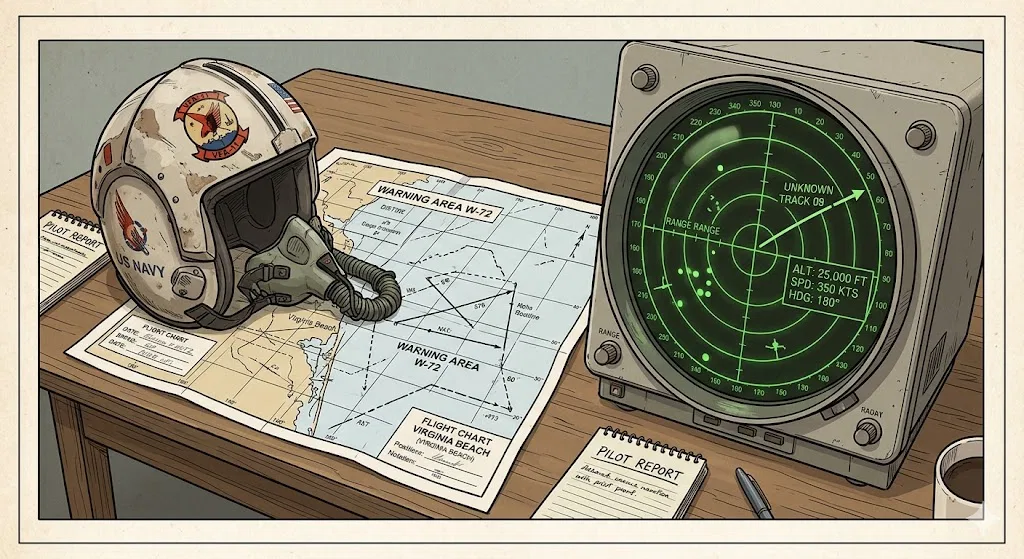
The strongest version of Graves’s case begins with a professional setting rather than a sensational claim. In his July 2023 testimony to the US House Oversight Committee, Graves described serving with VFA-11 near Virginia Beach in 2014, when his squadron began detecting unknown objects after a radar upgrade. He said the contacts were first dismissed as software glitches, then later corroborated with infrared sensors, and that sightings became common enough to enter daily briefs.[Oversight Committee]oversight.house.govOversight Committee Ryan HOC TestimonyOversight Committee Ryan HOC Testimony
That detail matters because it shifts the reader’s attention away from one dramatic sighting and towards a repeated operational problem. In aviation safety, frequency changes the meaning of an incident. A single ambiguous report may be written off as error, misidentification, or poor conditions. A pattern reported by multiple aircrew in the same training area raises different questions: whether there is an airspace management gap, whether sensors are producing misunderstood returns, whether drones or balloons are intruding, or whether crews lack a proper way to escalate the issue.[Oversight Committee]oversight.house.govOversight Committee Ryan HOC TestimonyOversight Committee Ryan HOC Testimony
The concrete case Graves highlighted was Warning Area W-72, a military training zone east of Virginia Beach. He testified that, during an air combat training mission, two jets encountered what one pilot described as a dark grey cube inside a clear sphere, apparently stationary at an entry point into the training area. According to Graves, the aircraft took evasive action, ended the mission, and returned to base; the squadron submitted a safety report, but there was no official acknowledgement and no further mechanism for reporting the broader pattern of sightings.[Oversight Committee]oversight.house.govOversight Committee Ryan HOC TestimonyOversight Committee Ryan HOC Testimony
This is why Graves’s testimony landed differently from older UFO narratives. The central issue was not “prove what the object was”. It was “why did a near-miss-style aviation event not produce a transparent, durable reporting trail?” In that framing, even a mundane explanation would still matter. A drone, balloon, sensor artefact, satellite flare, or adversary platform all imply different fixes, but none justifies a culture in which pilots are reluctant to report hazards.[Oversight Committee]oversight.house.govOversight Committee Ryan HOC TestimonyOversight Committee Ryan HOC Testimony

Why repeated sightings matter for safety
Repeated sightings matter because aviation risk is not limited to confirmed collisions. Pilots, air traffic controllers, engineers, and safety investigators care about uncertain hazards before they become accidents. The US intelligence community’s 2021 preliminary UAP assessment explicitly described UAP as a potential hazard to flight safety and noted 11 documented reports in which pilots described near misses with UAP. The same report said range incursions can force pilots to stop tests or training and land aircraft, which can itself discourage reporting if pilots think the practical result will be disrupted operations without useful follow-up.[ODNI]dni.govSource details in endnotes.
Graves’s safety argument also gained force because he did not present pilot testimony as a perfect data source. Instead, he argued that pilots are trained observers whose reports are valuable but need to be connected to sensor records, chain-of-command notifications, air traffic data, and scientific analysis. In his testimony, he said the most compelling accounts involved multiple witnesses and sensor systems, and that witnesses often wanted to add their accounts to a dataset rather than become public figures.[Oversight Committee]oversight.house.govOversight Committee Ryan HOC TestimonyOversight Committee Ryan HOC Testimony
That distinction helps separate the safety case from the more speculative edge of the disclosure movement. The claim is not that every pilot report is accurate in every detail, or that unusual motion proves non-human technology. The claim is that aviation institutions are supposed to collect and learn from uncertain safety events. A poor reporting pathway creates a “domain awareness gap”: officials cannot reliably distinguish misidentified satellites, drones, balloons, aircraft, sensor effects, and genuinely unresolved cases if reports are fragmented or suppressed by stigma.[NASA Science]science.nasa.govSource details in endnotes.
The official record partly supports this practical concern while also limiting the more dramatic interpretation. AARO’s fiscal year 2024 report said it received 757 UAP reports in the relevant period, with 708 in the air domain, and that 392 reports came from FAA logs covering UAP reports since 2021. It also said many resolved or pending-closure cases were attributed to prosaic objects such as balloons, birds, unmanned aircraft systems, satellites, and aircraft, while 444 reports lacked enough data for analysis. That mix is important: the problem is not simply “mystery objects everywhere”; it is also poor data quality, inconsistent reporting, and an overloaded sorting process.[U.S. Department of War]media.defense.govFY24 CONSOLIDATED ANNUAL REPORT ON UAP 508FY24 CONSOLIDATED ANNUAL REPORT ON UAP 508
The stigma problem Graves made visible
Graves’s most durable contribution may be his focus on stigma. In his House testimony, he said military and commercial pilots frequently witness UAP but that stigma silences aircrew who fear professional repercussions. He also said many witnesses who approached Americans for Safe Aerospace did not want to speak publicly; they wanted a safe intake process that would let them contribute information without becoming a spectacle.[Oversight Committee]oversight.house.govOversight Committee Ryan HOC TestimonyOversight Committee Ryan HOC Testimony
This is not a side issue. In aviation, stigma changes the dataset. If pilots avoid calling unusual objects over the radio, avoid filing reports, or strip reports of the details that sound strange, investigators lose the timing, location, altitude, heading, weather, sensor, and traffic context needed to identify the object. The result is a self-reinforcing loop: poor data makes cases harder to resolve, unresolved cases look more mysterious, and the subject remains embarrassing to report. NASA’s independent UAP study made a similar point, finding that negative perceptions around UAP reporting obstruct data collection and likely lead to data attrition.[NASA Science]science.nasa.govSource details in endnotes.
Commercial pilots create a particularly difficult case. Graves has argued that airline crews may see unusual lights or objects at high altitude but lack a protected, normalised reporting channel. At the same time, commercial aviation has many plausible sources of confusion: satellites, Starlink trains, military activity, balloons, drones, astronomical objects, reflections, and sensor limitations. That is exactly why a credible system needs to collect reports without ridicule while also testing them against ordinary explanations.[Oversight Committee]oversight.house.govOversight Committee Ryan HOC TestimonyOversight Committee Ryan HOC Testimony
The best safety framing is therefore neither credulous nor dismissive. It accepts that pilots can be reliable witnesses and still be mistaken about distance, altitude, size, speed, or cause, especially at night or with unfamiliar satellite behaviour. A 2024 aerospace paper on a Pacific commercial aviation case found that multiple pilot reports, photos, and video of an apparently anomalous event could be reconstructed as a recently launched Starlink satellite train; the authors argued that better advance data from satellite operators could reduce confusion and improve aviation safety.[arXiv]arxiv.orgSource details in endnotes.
What changed institutionally
Graves helped turn pilot safety into an organising platform. Americans for Safe Aerospace presents itself as a military pilot-led nonprofit focused on UAP, aerospace safety, data-driven research, and pilot support. Its public materials emphasise confidential pilot reporting, aviation safety, national security, and the Safe Airspace for Americans Act, a bipartisan proposal intended to create a protected process for civilian aviation personnel to report UAP.[Safe Aerospace]safeaerospace.orgSource details in endnotes.
The American Institute of Aeronautics and Astronautics has also become part of this implementation pathway. Its UAP Integration and Outreach Committee describes its charter as improving aerospace safety by increasing scientific knowledge of UAP and reducing barriers to their study. Its reporting guidance frames UAP as a safety issue involving hazard recognition, crew response, timely communication, and blame-free review, rather than as a question that must be solved at the moment of sighting.[AIAA UAP]aiaauap.orgSource details in endnotes.
NASA’s independent study gave this approach a major institutional boost. The panel recommended better use of NASA’s Aviation Safety Reporting System, known as ASRS, a confidential, voluntary, non-punitive system administered by NASA for the FAA. The report noted that ASRS receives roughly 100,000 aviation safety reports per year and said it could provide a valuable database for commercial pilot UAP reporting, even though it was not originally designed for that purpose.[NASA Science]science.nasa.govSource details in endnotes.
The FAA has also moved, though cautiously, towards formalising UAP terminology in air traffic procedures. In 2025, FAA notices updated references from “unidentified flying object” to “unidentified anomalous phenomena” and addressed reporting of UAP activities in air traffic control and facility procedures. Those notices were later cancelled into updated orders, but their significance is still clear: the topic had moved from folklore into procedural language.[Federal Aviation Administration]faa.govdocument IDdocument ID
What better reporting would need
A useful reporting system would not simply collect stories. It would make reports easier to file, harder to ridicule, and more useful to investigators. The core requirements are practical.
First, pilots need a protected path that treats UAP as possible safety events, not as career-risking confessions. This is why Graves and allied groups focus on retaliation protection and confidential reporting. The goal is to increase reporting without forcing pilots into public advocacy or media exposure.[Safe Aerospace]safeaerospace.orgSource details in endnotes.
Second, reports need standard fields. A sighting without time, location, altitude, bearing, duration, weather, aircraft state, traffic context, sensor mode, and available recordings is hard to analyse. NASA’s study stressed that civilian UAP reporting was not standardised and that sparse, incomplete data without curation or vetting protocols is inadequate for scientific inference.[NASA Science]science.nasa.govSource details in endnotes.
Third, the system must be designed to resolve ordinary cases quickly. A strong UAP reporting process should identify satellites, balloons, drones, aircraft, birds, weather effects, and sensor artefacts wherever possible. AARO’s 2024 report shows why: many cases that can be closed turn out to be prosaic, while many unresolved cases remain unresolved because they lack enough data. Better reporting should reduce both false mystery and false dismissal.[U.S. Department of War]media.defense.govFY24 CONSOLIDATED ANNUAL REPORT ON UAP 508FY24 CONSOLIDATED ANNUAL REPORT ON UAP 508
Fourth, reporting needs feedback. If pilots file a report and never hear whether it was identified, escalated, or archived, they have little reason to keep reporting. Graves’s W-72 account is powerful precisely because it describes a safety report followed by no meaningful acknowledgement or broader mechanism. In aviation safety culture, the absence of feedback is not neutral; it teaches crews that reporting does not matter.[Oversight Committee]oversight.house.govOversight Committee Ryan HOC TestimonyOversight Committee Ryan HOC Testimony

Why this changed the disclosure movement
The pilot safety frame gave the UFO disclosure movement a bridge to audiences who were not persuaded by extraordinary claims. A lawmaker, airline captain, aerospace engineer, or sceptical reader can reject alien conclusions and still support better reporting for unidentified objects in controlled airspace. That is the strategic importance of Graves’s role: he made “take the reports seriously” separable from “accept a particular explanation”.[Oversight Committee]oversight.house.govOversight Committee Ryan HOC TestimonyOversight Committee Ryan HOC Testimony
It also changed the moral centre of the debate. Instead of asking whether witnesses are believers, it asks whether institutions are learning from front-line observers. Pilots operate in systems where small anomalies can matter, near misses are worth documenting, and normalisation of deviance can become dangerous. A UAP that turns out to be a drone, balloon, satellite flare, or sensor issue is still useful if the report improves airspace awareness.[AIAA UAP]aiaauap.orgSource details in endnotes.
The limits remain just as important. Graves’s safety case does not prove the origin of UAP, and official reviews have not established extraterrestrial technology. The evidence base is uneven: some reports involve multiple sensors and trained witnesses, while others lack enough data for firm conclusions. The most defensible takeaway is narrower but consequential: repeated pilot reports of unidentified objects are a legitimate aviation safety and data-quality problem, and treating them as such is one of the disclosure movement’s most practical achievements.[U.S. Department of War]media.defense.govFY24 CONSOLIDATED ANNUAL REPORT ON UAP 508FY24 CONSOLIDATED ANNUAL REPORT ON UAP 508
Amazon book picks
Further Reading
Books and field guides related to Why Pilots Changed the UFO Conversation. Use these as the next step if you want deeper reading beyond the article.
UFO
"The full story of our national obsession with UFOs--and the covert, decades-long search by scientists, the United States military, and t...
The Report on Unidentified Flying Objects
Shows how aviation-related reports have long influenced UFO investigations.
UFOs
NEW YORK TIMES BESTSELLER • Impeccably researched, this riveting journalistic investigation separates fact from fiction, and documents th...
eBay marketplace picks
Marketplace Samples
Live-tested eBay searches with available results related to this page.




Endnotes
1.
Source: oversight.house.gov
Title: Oversight Committee Ryan HOC Testimony
Link:https://oversight.house.gov/wp-content/uploads/2023/07/Ryan-HOC-Testimony.pdf
2.
Source: science.nasa.gov
Link:https://science.nasa.gov/wp-content/uploads/2023/09/uap-independent-study-team-final-report.pdf
3.
Source: oversight.house.gov
Link:https://oversight.house.gov/hearing/unidentified-anomalous-phenomena-implications-on-national-security-public-safety-and-government-transparency/
4.
Source: dni.gov
Link:https://www.dni.gov/files/[ODNI
5.
Source: arxiv.org
Link:https://arxiv.org/abs/2403.08155
6.
Source: robertgarcia.house.gov
Link:https://robertgarcia.house.gov/media/press-releases/congressman-robert-garcia-and-congressman-glenn-grothman-reintroduce
7.
Source: aiaauap.org
Link:https://aiaauap.org/reporting/guidance
8.
Source: faa.gov
Title: document ID
Link:https://www.faa.gov/regulations_policies/orders_notices/index.cfm/go/document.information/documentID/1044304
9.
Source: faa.gov
Title: document ID
Link:https://www.faa.gov/regulations_policies/orders_notices/index.cfm/go/document.information/documentID/1044303
10.
Source: aiaa.org
Link:https://aiaa.org/get-involved/committees-groups/integration-and-outreach-division-committees/
11.
Source: aiaa.org
Link:https://aiaa.org/wp-content/uploads/2025/08/AIAA-UAPIOC-Opinion-Paper-UAP-Occupational-Safety-Reporting_ForPublication_kb.pdf
12.
Source: arc.aiaa.org
Title: 6.2024 3736
Link:https://arc.aiaa.org/doi/10.2514/6.2024-3736
13.
Source: aerospaceamerica.aiaa.org
Title: transparency safety and science the uap landscape in 2025
Link:https://aerospaceamerica.aiaa.org/year-in-review/transparency-safety-and-science-the-uap-landscape-in-2025/
14.
Source: aiaa.org
Link:https://aiaa.org/advocacy/policy-papers/white-papers/
15.
Source: docs.house.gov
Title: HHRG 118 GO06 Bio GravesR 20230726
Link:https://docs.house.gov/meetings/GO/GO06/20230726/116282/HHRG-118-GO06-Bio-GravesR-20230726.pdf
16.
Source: science.nasa.gov
Link:https://science.nasa.gov/uap/
17.
Source: faa.gov
Title: general statements
Link:https://www.faa.gov/newsroom/statements/general-statements
18.
Source: aaro.mil
Link:https://www.aaro.mil/
19.
Source: war.gov
Title: department of defense releases the annual report on unidentified anomalous phen
Link:https://www.war.gov/News/Releases/Release/Article/3964824/department-of-defense-releases-the-annual-report-on-unidentified-anomalous-phen/
20.
Source: safeaerospace.org
Link:https://www.safeaerospace.org/
21.
Source: media.defense.gov
Title: FY24 CONSOLIDATED ANNUAL REPORT ON UAP 508
Link:https://media.defense.gov/2024/Nov/14/2003583603/-1/-1/0/FY24-CONSOLIDATED-ANNUAL-REPORT-ON-UAP-508.PDF
22.
Source: aiaauap.org
Link:https://aiaauap.org/
23.
Source: x.com
Link:https://x.com/AIAA_UAP
24.
Source: aiaauap.org
Link:https://aiaauap.org/team/ryan-graves
25.
Source: linkedin.com
Title: Ryan Graves
Link:https://www.linkedin.com/in/whygraves
26.
Source: safeaerospace.org
Link:https://www.safeaerospace.org/news
Additional References
27.
Source: youtube.com
Title: UAP sightings ‘routine,’ Ex-Navy pilot Ryan Graves says
Link:http://www.youtube.com/watch?v=dMNDsqYVIP8
Source snippet
Ryan Graves pilot safety UAP aviation testimony Ex-Fighter Pilots on UFOs: Ryan Graves Reveals the Truth About UAPs | Lehto Files Lehto F...
28.
Source: youtube.com
Title: ‘UAPs Are In Our Airspace’: Key UAP Witness Ryan Graves Provides Opening Remarks
Link:http://www.youtube.com/watch?v=8t_e-Zbu7Ag
Source snippet
Ex-Fighter Pilots on UFOs: Ryan Graves Reveals the Truth About UAPs | Lehto Files...
29.
Source: youtube.com
Title: Ryan Graves Opening Statement at Unidentified Anomalous Phenomena (UAP) Hearing
Link:http://www.youtube.com/watch?v=Lf6y9QHj5S8
Source snippet
'UAPs Are In Our Airspace': Key UAP Witness Ryan Graves Provides Opening Remarks...
30.
Source: youtube.com
Link:http://www.youtube.com/watch?v=zBjgALm1R8Y
Source snippet
01-17-25: Ryan Graves I UAP Flight Risks | Drones & More...
31.
Source: cga.ct.gov
Link:https://www.cga.ct.gov/2026/appdata/TMY/2026HB-05422-R000312-Collins%2C%20Sean%2C%20Government%20Affairs%20Lead-Americans%20for%20Safe%20Aerospace-Supports-TMY.PDF
32.
Source: youtube.com
Title: 01-17-25: Ryan Graves I UAP Flight Risks | Drones & More!
Link:http://www.youtube.com/watch?v=9hn5NC4DMoc
Source snippet
UAP sightings 'routine,' Ex-Navy pilot Ryan Graves says...
33.
Source: x.com
Link:https://x.com/RepGrothman/status/1745472381098013128
34.
Source: linkedin.com
Link:https://www.linkedin.com/posts/open-minds-uap-news_aiaa-uapioc-opinion-paper-uap-occupational-safety-reportingforpublicationkbpdf-activity-7369072328258879491-IakR
35.
Source: linkedin.com
Link:https://www.linkedin.com/posts/americans-for-safe-aerospace_what-might-we-learn-from-ufo-files-trump-activity-7432424089207599104-HkO-
36.
Source: facebook.com
Link:https://www.facebook.com/groups/218676792817854/posts/1380216686663853/
Topic Tree