Within UAP Disclosure
What Science Needs Before Calling It Aliens
NASA's UAP study argues that better data, transparency, and peer review matter more than dramatic claims.
On this page
- Why NASA treated UAP as a data problem
- Limits of eyewitness reports
- How scientific standards could improve cases
Page outline Jump by section
Introduction
NASA’s 2023 UAP study changed the tone of the UFO disclosure debate by treating unidentified anomalous phenomena not as proof of aliens, but as a scientific data problem. Its central message was clear: unusual reports deserve serious investigation, but extraordinary conclusions require reliable measurements, transparent methods, repeatable analysis, and peer review. NASA said there was no conclusive peer-reviewed evidence that UAP have an extraterrestrial origin, while also arguing that the subject should not be dismissed simply because it carries cultural stigma.[NASA Science]science.nasa.govNASA Science…
That position matters within the disclosure movement because it gives UAP a form of scientific legitimacy without endorsing the movement’s most dramatic claims. NASA’s study did not attempt to solve famous UFO cases or confirm hidden government programmes. Instead, it asked what kind of evidence would be needed before science could make stronger claims about any unexplained object, signal, or event in the sky.[NASA Science]science.nasa.govNASA Science…
Why NASA Treated UAP as a Data Problem
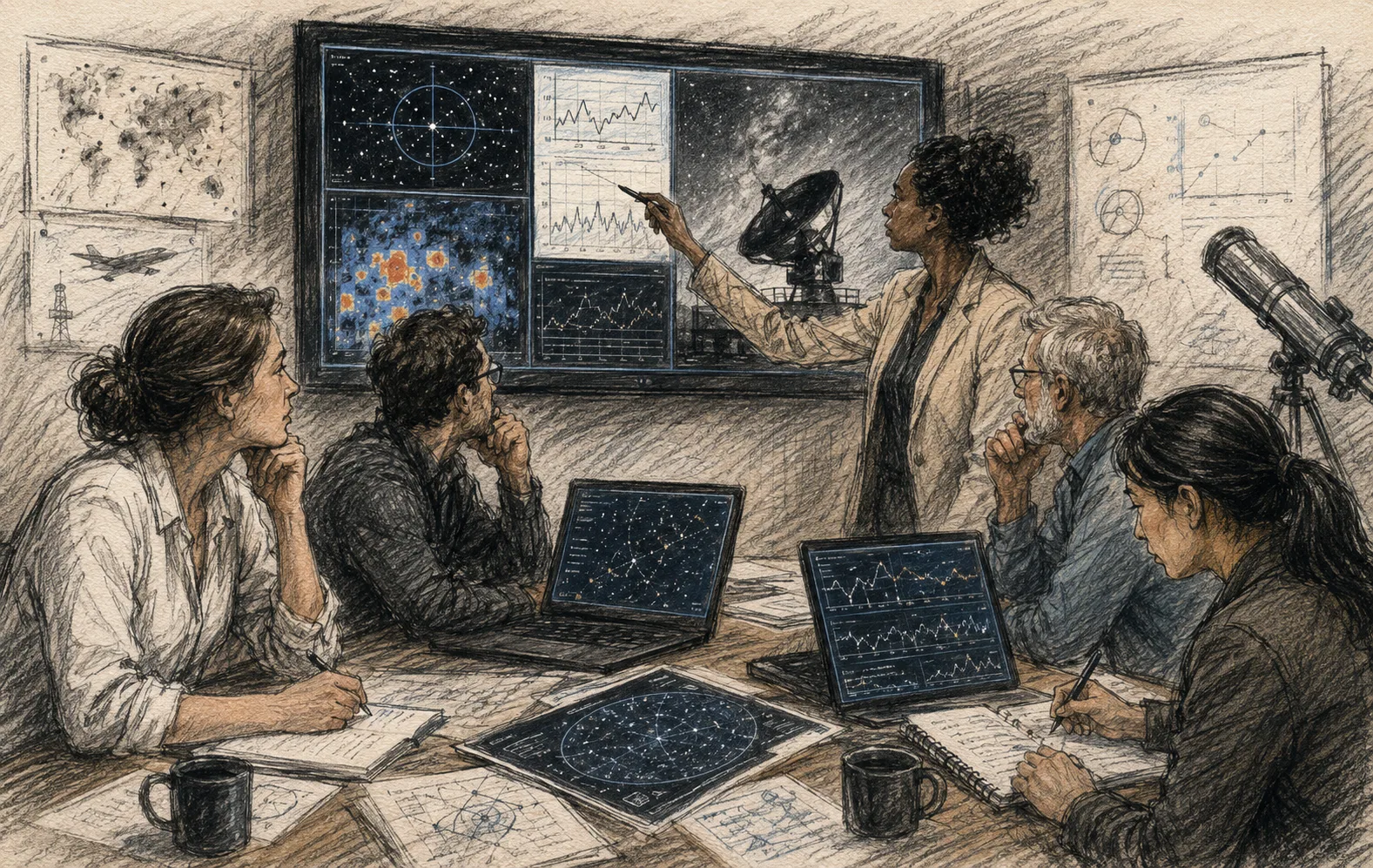
NASA commissioned its independent study team in 2022 to examine UAP “from a scientific perspective”, focusing on what data already existed, what data should be collected in future, and how the agency’s scientific tools could contribute to understanding the issue. The final report, released in September 2023, was therefore a roadmap rather than a case verdict. It was not designed to re-investigate Roswell, Navy videos, whistleblower allegations, or every unresolved military report.[NASA Science]science.nasa.govNASA Science…
The report’s most important move was to separate “unidentified” from “extraordinary”. A sighting may be unresolved because the object was genuinely unusual, but it may also remain unresolved because the original evidence was too thin: a brief observation, missing sensor settings, no range estimate, no independent measurement, or no way to reconstruct the environment. NASA’s report states that many UAP observations are coincidental rather than deliberately collected for scientific study, and that existing observations are often not optimised for systematic analysis.[NASA Science]science.nasa.govNASA Science…
That distinction is crucial. In popular UFO debate, an unexplained case can be treated as a residue left over after ordinary explanations fail. In science, an unexplained case is often a prompt to ask whether the dataset was strong enough to decide anything in the first place. NASA’s answer was that the present UAP evidence base is usually too incomplete to support firm conclusions about origin, behaviour, or technology.[NASA Science]science.nasa.govNASA Science…
NASA’s role, as the study framed it, is not to replace the Pentagon’s All-domain Anomaly Resolution Office, or AARO, which Congress made the lead federal organisation for resolving UAP cases. Instead, NASA can complement that defence-led process with open scientific inquiry, public datasets, calibrated instruments, experience in anomaly detection, and methods borrowed from fields such as Earth science, astrophysics, astrobiology, and aviation safety.[NASA Science]science.nasa.govNASA Science…

What “Better Evidence” Means in Practice
NASA’s report repeatedly returns to a simple standard: a UAP case becomes scientifically useful when it includes enough reliable information to test competing explanations. That means more than a striking video or an impressive witness. It means knowing where the sensor was, what it was designed to measure, how it was calibrated, what its limits were, what environmental conditions existed, and whether another independent system recorded the same event.[Wikisource]en.wikisource.orgResponses to Statement of TaskResponses to Statement of Task
The report identified several recurring weaknesses in UAP data:
- Poor sensor calibration: without knowing how an instrument was tuned and tested, an apparent speed, shape, or movement may be misleading.
- Lack of multiple measurements: a single camera or witness angle can make ordinary objects look anomalous.
- Missing metadata: time, location, sensor mode, exposure settings, sensitivity, storage depth, weather, and platform motion can be essential to interpretation.
- Weak baseline data: investigators need to know what normal aircraft, balloons, drones, satellites, birds, atmospheric effects, and sensor artefacts look like before they can identify anomalies confidently.[Wikisource]en.wikisource.orgPage:UAP Independent Study TeamPage:UAP Independent Study Team
This is why NASA’s study treated UAP as a measurement challenge before treating it as a mystery. A scientific investigation has to build a comparison set of ordinary signals, not just collect unusual ones. The report uses a “needle in a haystack” logic: researchers can either model the needle they expect to find, or model the hay so well that anything genuinely different stands out. For UAP, the second approach is often more realistic because nobody yet knows what the decisive unknown signal would look like.[NASA Science]science.nasa.govNASA Science…
This approach also changes how artificial intelligence should be understood. NASA supported the possible use of machine learning and AI, but not as a magic filter that can turn messy footage into certainty. The report says AI can help search for rare events only after the underlying data meet high standards and known background signals have been extensively characterised. In other words, better algorithms cannot compensate for poorly collected evidence.[NASA Science]science.nasa.govNASA Science…
Why Eyewitness Reports Still Matter but Cannot Carry the Case
NASA did not dismiss witnesses. The report acknowledges that many UAP reports come from credible observers, including military aviators, and that eyewitness accounts can reveal patterns such as clusters in time, location, or circumstances. That is important because the disclosure movement has often argued that pilots, radar operators, and defence personnel were unfairly ignored or stigmatised.[NASA Science]science.nasa.govNASA Science…
But the report also draws a firm boundary around what testimony can prove. Eyewitness reports are not reproducible, and they often lack the information needed to make definitive conclusions about a phenomenon’s origin. A pilot may be honest, skilled, and experienced while still being limited by distance, lighting, speed, stress, cockpit workload, sensor presentation, environmental effects, or the absence of independent corroboration.[NASA Science]science.nasa.govNASA Science…
That point is sometimes misunderstood as an insult to witnesses. It is better read as a rule about evidence. Science does not require a witness to be unreliable before asking for independent measurement. It asks whether another observer, instrument, or analytical team can test the same claim. Without that, a report may be valuable as an alert, but it cannot by itself establish whether the object was a drone, balloon, aircraft, atmospheric event, sensor artefact, classified platform, or something genuinely unknown.[NASA Science]science.nasa.govNASA Science…
NASA also linked witness quality to reporting culture. The study noted that stigma can reduce reporting rates, and outside coverage of the public meeting highlighted the reluctance of some commercial pilots to report unusual observations because of reputational risk. That matters because a reporting system distorted by embarrassment, ridicule, or professional fear will produce biased data: some people will stay silent, others will report only dramatic cases, and mundane but useful baseline observations may be lost.[Wikisource]en.wikisource.orgIndex:UAP Independent Study Team Final ReportIndex:UAP Independent Study Team Final Report
Transparency Without Sensationalism
NASA’s entry into the UAP field was symbolically powerful because the agency is associated with space exploration, public science, and the search for life beyond Earth. For disclosure advocates, NASA’s involvement suggested that UAP could no longer be treated purely as fringe folklore or classified defence business. For sceptics, NASA’s framing offered a way to study unusual reports without leaping to extraterrestrial conclusions.[Axios]axios.comNASA releases new UAP report, and finds no evidence of aliensNASA releases new UAP report, and finds no evidence of aliens
The agency tried to hold both positions at once: reduce stigma, increase transparency, and insist on evidence. NASA Administrator Bill Nelson described the effort as a shift from sensationalism to science, and the final report emphasised open data, public scientific methods, and NASA’s ability to work with other agencies while maintaining a culture different from intelligence classification.[WIRED]wired.comNASA Didn't Find Aliens-but if You See Any UFOs, HollerNASA Didn't Find Aliens-but if You See Any UFOs, Holler
That transparency is not absolute. NASA’s report recognises that some military or intelligence imagery is classified because it reveals US technical capabilities, not necessarily because it shows anything exotic. This creates a difficult public trust problem: secrecy may be justified for national security reasons, yet it also feeds suspicion that the most important evidence is being withheld.[NASA Science]science.nasa.govNASA Science…
The scientific solution is not simply to demand that every sensor product become public. It is to build parallel channels of evidence that can be openly analysed: civilian aviation reporting, calibrated ground-based observing systems, commercial and public datasets, atmospheric context from Earth-observing satellites, and transparent standards for deciding when a case has been resolved or remains genuinely unexplained.[NASA Science]science.nasa.govNASA Science…
The “No Evidence of Aliens” Finding Was Not the Same as “Nothing to Study”
The most quoted takeaway from NASA’s report was that it found no conclusive evidence in peer-reviewed scientific literature for an extraterrestrial origin of UAP. That finding aligned with later public conclusions from AARO, which reported no verified evidence that UAP cases represented extraterrestrial technology or hidden reverse-engineering programmes.[NASA Science]science.nasa.govNASA Science…
But NASA’s conclusion was more careful than a simple debunk. The report did not say every UAP has been explained. It said the available evidence does not justify extraterrestrial conclusions, and that the absence of good data often prevents firm conclusions either way. This is a narrower, more scientific claim: unresolved is not the same as alien, but unresolved also does not mean unworthy of investigation.[NASA Science]science.nasa.govNASA Science…
The report placed extraterrestrial life in a broader scientific context. NASA already supports astrobiology and technosignature research, including the search for signs of life or technology beyond Earth. The key difference is that those fields use explicit standards of evidence: possible biosignatures or technosignatures must be tested against non-biological, instrumental, environmental, and other ordinary explanations before stronger claims are made. NASA argued that UAP claims should face the same discipline.[NASA Science]science.nasa.govNASA Science…
That makes NASA’s position uncomfortable for both extremes of the UFO debate. It rejects the claim that dramatic testimony or ambiguous videos are enough to call UAP alien. It also rejects the idea that the subject is inherently unscientific. The study’s core point is that the question can become more scientific only if researchers improve the evidence pipeline before arguing about the most extraordinary interpretation.[NASA Science]science.nasa.govNASA Science…
How Scientific Standards Could Improve Future Cases
A NASA-style UAP investigation would begin before the unusual sighting, not after it. Instead of waiting for a viral clip or pilot report, researchers would design systems that continuously collect calibrated, time-synchronised, multi-sensor data in known environments. That is the difference between a case file assembled from scraps and an observation programme built to test hypotheses.[NASA Science]science.nasa.govNASA Science…
A stronger future case would ideally include several features: optical imagery, infrared data, radar or other range information, precise time and location, sensor metadata, weather and atmospheric context, platform motion, nearby air traffic, satellite and balloon records, and a documented chain of custody for the data. Each added layer helps investigators rule out ordinary explanations rather than merely assert that none are obvious.[Wikisource]en.wikisource.orgPage:UAP Independent Study Team Final ReportPage:UAP Independent Study Team Final Report
This is where NASA’s existing strengths become relevant. The agency works with well-calibrated instruments, large public archives, Earth-observation datasets, anomaly detection, modelling, and interdisciplinary peer review. Its satellites are not generally designed to spot small fast-moving objects in the way a purpose-built UAP observatory might, but they can provide environmental context: weather, clouds, ocean conditions, fires, atmospheric events, and other background features that may help explain reports.[NASA Science]science.nasa.govNASA Science…
NASA’s study also fits with a wider technical movement toward more serious UAP data standards. The American Institute of Aeronautics and Astronautics has a UAP Integration and Outreach Committee focused on aerospace safety, scientific knowledge, and reducing barriers to study, while academic and private research groups have proposed multimodal ground-based observatories that combine visible, infrared, radar, environmental, and other sensors.[AIAA UAP]aiaauap.orgSource details in endnotes.
The practical payoff is not just “finding aliens” or dismissing witnesses. Better standards could improve aviation safety, identify drones or balloons near sensitive airspace, reduce false alarms, expose sensor artefacts, and create a smaller, cleaner set of genuinely unresolved events. For the disclosure movement, that is a less cinematic outcome than a single revelation, but it is more durable: evidence that survives calibration, replication, and peer criticism is harder for institutions to ignore.[AIAA]aiaa.orgSource details in endnotes. - Shaping the future of aerospace
What NASA Changed in the Disclosure Debate
NASA’s UAP study did not validate the strongest claims of UFO disclosure campaigners. It did not confirm recovered craft, non-human intelligence, secret reverse-engineering programmes, or extraterrestrial visitation. What it did validate was the narrower claim that UAP reporting suffers from weak data, stigma, classification barriers, inconsistent reporting systems, and the lack of an open scientific framework.[NASA Science]science.nasa.govNASA Science…
That is why the study matters. It moved the conversation away from a binary fight between believers and debunkers and towards a more useful question: what evidence would be good enough to change a reasonable person’s mind? NASA’s answer was not a slogan, but a standard — calibrated sensors, reproducible data, transparent repositories, falsifiable hypotheses, peer review, and the discipline to treat extraterrestrial explanations as a last resort rather than a starting assumption.[NASA Science]science.nasa.govNASA Science…
Within the UFO disclosure movement, this creates a demanding test. Calls for openness are strongest when paired with scientific standards that can separate misidentifications from anomalies and anomalies from extraordinary claims. NASA’s contribution was to make that distinction explicit: disclosure without evidence can fuel speculation, but evidence without transparency cannot build public trust.
Amazon book picks
Further Reading
Books and field guides related to What Science Needs Before Calling It Aliens. Use these as the next step if you want deeper reading beyond the article.
UFO
"The full story of our national obsession with UFOs--and the covert, decades-long search by scientists, the United States military, and t...
The Demon-Haunted World
Rating: 4.5/5 from 43 Google Books ratings
Best match for scientific standards, evidence quality, and extraordinary claims.
eBay marketplace picks
Marketplace Samples
Live-tested eBay searches with available results related to this page.



Endnotes
1.
Source: science.nasa.gov
Link:https://science.nasa.gov/wp-content/uploads/2023/09/uap-independent-study-team-final-report.pdf
Source snippet
NASA Science...
2.
Source: science.nasa.gov
Link:https://science.nasa.gov/uap/
Source snippet
NASA ScienceUAPJune 16, 2022 — 9 Jun 2022 — On June 9, 2022, NASA announced that the agency is commissioning a study team to examine unid...
Published: June 16, 2022
3.
Source: science.nasa.gov
Link:https://science.nasa.gov/uap/faqs/
Source snippet
NASA ScienceUAP FAQsThe UAP independent study team's main focus for the report was to come up with a way in which to evaluate and study U...
4.
Source: nasa.gov
Link:https://www.nasa.gov/news-release/nasa-to-release-discuss-unidentified-anomalous-phenomena-report/
Source snippet
NASA to Release, Discuss Unidentified Anomalous...NASA commissioned the study to examine UAP from a scientific perspective and creat...
5.
Source: aaro.mil
Link:https://www.aaro.mil/
6.
Source: en.wikisource.org
Title: Responses to Statement of Task
Link:https://en.wikisource.org/wiki/NASA_Unidentified_Anomalous_Phenomena%3A_Independent_Study_Team_Report/Responses_to_Statement_of_Task
7.
Source: en.wikisource.org
Title: Page:UAP Independent Study Team
Link:https://en.wikisource.org/wiki/Page%3AUAP_Independent_Study_Team_-_Final_Report.pdf/29
8.
Source: axios.com
Title: NASA releases new UAP report, and finds no evidence of aliens
Link:https://www.axios.com/2023/09/14/nasa-uap-report-release
9.
Source: wired.com
Title: NASA Didn’t Find Aliens-but if You See Any UFOs, Holler
Link:https://www.wired.com/story/nasa-ufos-aliens-report-2023
10.
Source: nasa.gov
Title: update nasa shares uap independent study report names director
Link:https://www.nasa.gov/news-release/update-nasa-shares-uap-independent-study-report-names-director/
11.
Source: aiaa.org
Link:https://aiaa.org/wp-content/uploads/2025/08/AIAA-UAPIOC-Opinion-Paper-UAP-Occupational-Safety-Reporting_ForPublication_kb.pdf
12.
Source: aaro.mil
Title: AARO Historical Record Report Vol 1 2024
Link:https://www.aaro.mil/Portals/136/PDFs/AARO_Historical_Record_Report_Vol_1_2024.pdf
13.
Source: arc.aiaa.org
Title: 6.2023 4322
Link:https://arc.aiaa.org/doi/10.2514/6.2023-4322
14.
Source: aerospaceamerica.aiaa.org
Title: transparency safety and science the uap landscape in 2025
Link:https://aerospaceamerica.aiaa.org/year-in-review/transparency-safety-and-science-the-uap-landscape-in-2025/
15.
Source: aiaa.org
Link:https://aiaa.org/get-involved/committees-groups/integration-and-outreach-division-committees/
16.
Source: arc.aiaa.org
Title: 6.2024 3736
Link:https://arc.aiaa.org/doi/10.2514/6.2024-3736
17.
Source: space.com
Title: nasa names head of uap research
Link:https://www.space.com/nasa-names-head-of-uap-research
18.
Source: space.com
Title: nasa ufo uap study team first results revealed
Link:https://www.space.com/nasa-ufo-uap-study-team-first-results-revealed
19.
Source: en.wikisource.org
Title: Index:UAP Independent Study Team Final Report
Link:https://en.wikisource.org/wiki/Index%3AUAP_Independent_Study_Team_-_Final_Report.pdf
20.
Source: en.wikisource.org
Title: Page:UAP Independent Study Team Final Report
Link:https://en.wikisource.org/wiki/Page%3AUAP_Independent_Study_Team_-_Final_Report.pdf/23
21.
Source: aiaauap.org
Link:https://aiaauap.org/
22.
Source: x.com
Link:https://x.com/AIAA_UAP
23.
Source: aiaauap.org
Link:https://aiaauap.org/research
Additional References
24.
Source: arxiv.org
Link:https://arxiv.org/abs/2305.18566
25.
Source: youtube.com
Title: Nasa UFO report: What we learned from UAP study
Link:https://www.youtube.com/watch?v=eTaltOQLVLU
Source snippet
REPLAY! NASA Unidentified Anomalous Phenomena Independent Study Report Update...
26.
Source: youtube.com
Title: Replay! NASA’s Release of the Unidentified Anomalous Phenomena Report
Link:https://www.youtube.com/watch?v=nuBMnluJfs0
Source snippet
NASA discusses findings from UFO study | full video...
27.
Source: arxiv.org
Link:https://arxiv.org/abs/2403.15368
28.
Source: youtube.com
Title: NASA discusses findings from UFO study | full video
Link:https://www.youtube.com/watch?v=PDcI_N2aH4Q
Source snippet
Nasa UFO report: What we learned from UAP study - BBC News...
29.
Source: researchgate.net
Link:https://www.researchgate.net/publication/397241203_Research_into_Unidentified_Anomalous_Phenomena_UAP_as_an_official_academic_research_topic_at_a_university
30.
Source: apnews.com
Link:https://apnews.com/article/8b477a5ed6a42f99bb13a4518368ce9a
31.
Source: reddit.com
Link:https://www.reddit.com/r/space/comments/16ij6ui/nasa_shares_unidentified_anomalous_phenomena/
32.
Source: reddit.com
Link:https://www.reddit.com/r/Futurology/comments/16ijwyl/nasa_shares_unidentified_anomalous_phenomena/
33.
Source: ralphbuncheinstitute.org
Link:https://ralphbuncheinstitute.org/nasa-unidentified-anomalous-phenomena-independent-study-team-report/
Topic Tree